
Ports & Logistics
Infrastructure
Port terminals and logistics parks that open Africa's coastlines to global trade.
Overview
Africa's coastline runs for more than 30,000 km. Its ports handle less than 3% of global container traffic. The gap between Africa's maritime trade potential and its current port capacity is one of the clearest infrastructure investment opportunities on the continent.
KXT develops and operates port infrastructure: container terminals, bulk cargo facilities, logistics parks, and intermodal hubs. We work with port authorities, shipping lines, and government ministries to structure projects that reach financial close and deliver to international operational standards.
Port projects are typically large, complex, and backed by long-term government concessions. They suit KXT's lump-sum EPC delivery capability and EPC+F financing model.
Market Opportunity
African seaborne trade is growing at more than 4% per year, consistently outpacing the expansion of port handling capacity. Container dwell times at West African ports average 20 to 30 days, compared to 3 to 5 days at ports in Southeast Asia. That gap represents lost trade competitiveness that governments are actively working to close.
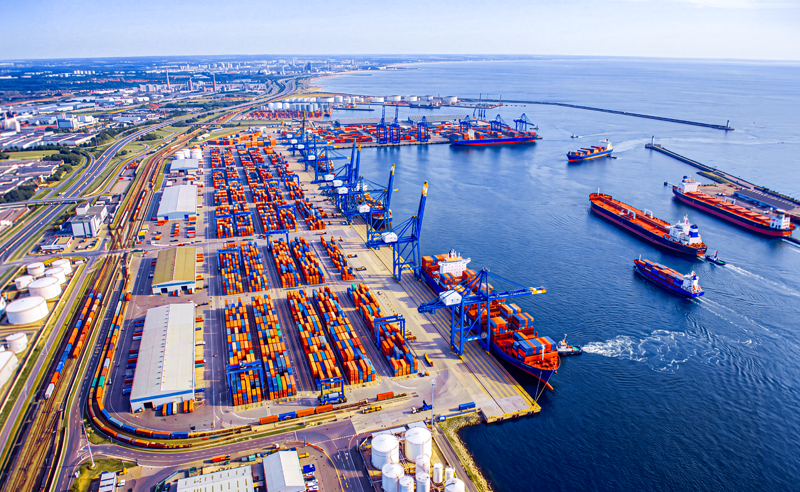
New container terminal capacity is under development across KXT's core markets. Nigeria's Lekki Deep Sea Port reached full commercial operations in 2024 with a capacity of 2.7 million TEUs, demonstrating the commercial viability of private sector port development in the region. Kenya's LAPSSET corridor requires additional port infrastructure investment. Egypt's Ain Sokhna and East Port Said ports are expanding to capture Red Sea transshipment traffic. South Africa's Transnet is seeking private sector partners for terminal operations at Durban and Cape Town.
Beyond major terminals, inland logistics networks are equally underdeveloped. Dry ports, bonded warehouses, and intermodal rail connections are missing links that add cost and time to every cargo movement. KXT's civil and logistics infrastructure capability positions us to develop these links alongside port terminal projects.
Investment Focus
KXT targets port concession agreements, container terminal development mandates, and integrated logistics park projects with defined throughput commitments and long-term operational frameworks. We seek projects where the revenue model is underpinned by throughput guarantees, government availability payments, or anchor shipping line agreements that provide bankable cash flow projections.
Where appropriate, we structure BOT or BOO arrangements that allow KXT to retain operational revenue streams post-commissioning. Port terminals operated under BOT concessions typically generate revenues for 25 to 35 years, providing the long-duration cash flows that match the investment horizon of our LP base.
Logistics parks adjacent to major port facilities are a complementary investment category. With warehousing, distribution, and cold chain facilities under multi-year tenant agreements, these assets provide diversified revenue streams within a single project footprint.
Development and Execution
KXT's ports capability spans marine civil works, quay construction, terminal equipment procurement, and logistics facility design. We manage every stage of port project delivery from marine geotechnical investigation through construction, commissioning, and long-term operations.
For container terminals, we coordinate marine, civil, structural, and mechanical engineering in parallel, managing global procurement for cranes and handling equipment alongside African civil construction. Our project controls function manages the multi-year delivery schedule that large port projects require, with earned value tracking and milestone reporting built to satisfy DFI lender requirements.
We work directly with port authorities, customs agencies, and shipping lines throughout project development, ensuring the commercial and regulatory framework is in place before construction begins.
Project Examples
- ›Seaports & container terminals
- ›Wharves, cranes & shipping channels
- ›Warehousing & distribution parks
- ›Intermodal hubs (rail/road connections)
Interested in this sector?
Speak with our team about investment and partnership opportunities.