Africa's energy infrastructure gap is a $90 billion annual opportunity. Here is who can access it.
10 June 2026
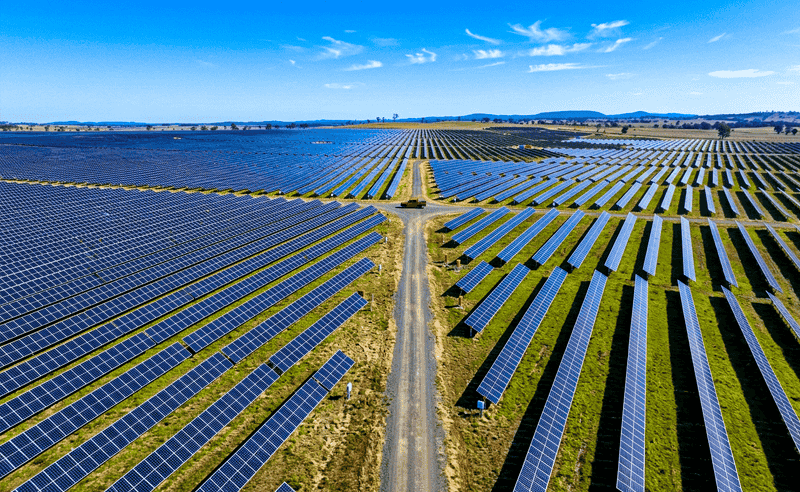
Africa hosts more than 60% of the world's highest-quality solar resources, according to the International Renewable Energy Agency, yet generates less than 4% of global electricity. That single comparison captures the size of the opportunity more clearly than any market research report. The gap between Africa's energy potential and its energy infrastructure is not a problem waiting to be solved. It is an investment category waiting to be scaled.
The scale is well documented. The International Energy Agency estimates Africa needs more than USD 90 billion in energy infrastructure investment every year to meet growing demand and achieve universal electricity access by 2030. Current annual investment sits at roughly USD 30 billion. The shortfall of USD 60 billion per year is not a rounding error. It is a structural gap that has persisted for a decade and shows no sign of closing without significant private capital mobilisation.
The gap exists not because investors are avoiding Africa. It exists because most African energy projects are not structured in a way that institutional capital can access. Power purchase agreements are with government offtakers whose credit ratings limit what lenders will underwrite. Currency risk is unhedged. Construction partners cannot provide fixed-price, date-certain contracts. Development finance institutions cannot lend without EPC certainty. Private equity cannot invest without DFI co-financing. The deal never closes.
Two sub-sectors are breaking that pattern. Gas monetisation and utility-scale renewables are both generating bankable projects at scale for the first time in African history.
Gas monetisation is the more immediate opportunity. Africa holds proved natural gas reserves exceeding 600 trillion cubic feet, according to the U.S. Energy Information Administration — and most of it remains stranded for want of the midstream and downstream infrastructure to monetise it. Nigeria alone flares more than seven billion cubic metres of natural gas each year, enough to power more than 40 million homes, according to the World Bank's Global Gas Flaring Tracker. Government policy across West and East Africa is shifting decisively toward monetisation: LNG, GTL, and gas-to-power projects that convert a stranded resource into revenue and electricity simultaneously. These projects need EPC partners who understand gas engineering and EPC+F developers who can bring the financing alongside.
Renewable energy is the medium-term opportunity. Solar module costs have fallen more than 90% since 2010, according to the International Renewable Energy Agency, making utility-scale solar the cheapest source of new electricity generation across most of Africa today, typically less than a third the cost of diesel generation on the same site. The constraint is no longer technology cost. It is the bankability of the offtake counterpart and the availability of grid connection infrastructure. Both are solvable with the right developer and the right DFI co-financing structure in place from project inception.
For institutional investors, the access question is the harder one. Direct investment in African energy infrastructure requires on-the-ground origination networks, construction management capability, regulatory relationships, and an understanding of DFI co-financing structures that most institutional platforms do not have in-house. The alternative is investing through a fund or developer with those capabilities embedded.
KXT's EPC+F model provides that access. We originate projects directly with governments and DFIs, structure the financing (including DFI first-loss tranches, guarantee mechanisms, and blended finance structures), and deliver construction under a lump-sum EPC contract. Investors who come into our projects gain exposure to African energy infrastructure without needing to build the origination and execution capability themselves.
The returns profile of African energy infrastructure compares well to global alternatives. Long-dated, inflation-linked cash flows from power purchase agreements carry the same structural characteristics that attract institutional capital to infrastructure in developed markets, with a yield premium that still reflects the operational risk of building in emerging markets. As more transactions close, more developers build track records, and more DFIs co-invest alongside private capital, that premium will compress.
The investors who will benefit most from Africa's energy infrastructure build-out are those who enter while the risk premium is still elevated and competition for deal flow is still limited. That window is open today. It will not be open at the same terms for long.